
Donald Trump’s recent defense of skilled immigrants, where he stated the US must “bring talent into the country,” was widely seen as a major policy pivot. His admission that Americans “don’t have certain talents” and “have to learn” seemed to open the door for a more welcoming H-1B visa policy, a significant departure from his administration’s previous hardline rhetoric.
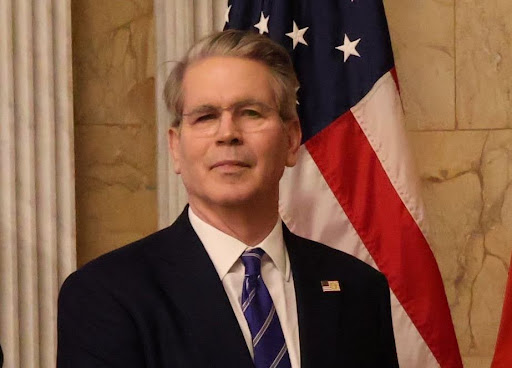
This perceived shift has now been sharply redefined by Treasury Secretary Scott Bessent. Bessent clarified that the president’s comments were not about long-term immigration but about a new, temporary “knowledge transfer” program. The policy is not “hire foreigners” but “hire foreigners to train Americans,” after which they will be required to leave.
Bessent elaborated on this “train and return” vision in an interview. “I think the president’s vision here is to bring in overseas workers who have the skills for three, five, seven years to train the US workers,” he explained. The expectation is clear: once the American workers are trained, the foreign experts “can go home,” and the domestic workforce “will fully take over.”
The necessity for such a program, Bessent argued, comes from a severe skills gap in key industrial sectors. “An American can’t have that job, not yet,” he insisted, pointing to America’s diminished capacity in shipbuilding and semiconductor manufacturing. This temporary injection of foreign expertise is seen as a necessary step to rebuild domestic capabilities.
Bessent enthusiastically endorsed this as a “home run” strategy. It leverages foreign expertise to solve an American problem. The model of “overseas partners coming in, teaching American workers, then returning home” is positioned as a win-win, boosting US industrial strength while ensuring the jobs ultimately go to Americans.