
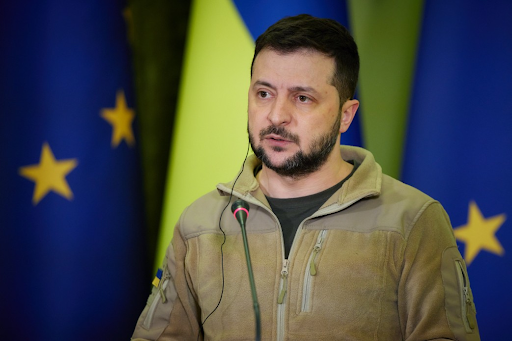
President Volodymyr Zelenskyy stated Sunday that Ukraine has finalized a security guarantees agreement with the United States, describing the document as “100 per cent ready” for signature. Speaking from Vilnius during an official visit to Lithuania, the Ukrainian leader explained that authorities are now waiting for partner nations to set a date for the formal signing ceremony. Following the signature, the agreement must undergo ratification in both the U.S. Congress and Ukraine’s parliament, marking an important step toward institutionalizing American security commitments.
This development comes after two days of trilateral negotiations in Abu Dhabi that brought together Ukrainian, American, and Russian representatives. According to Zelenskyy, these discussions were particularly significant because they included military representatives from all three sides, not just diplomatic personnel. This may have been the first such comprehensive trilateral format in considerable time, suggesting that parties are engaging with the technical and operational aspects of potential security arrangements rather than limiting discussions to high-level political statements.
Zelenskyy used his platform in Vilnius to also address Ukraine’s European aspirations, setting 2027 as the goal for achieving European Union membership. He described EU accession as an “economic security guarantee” that would complement the military security assurances being negotiated with the United States. This twin-track approach reflects Ukraine’s understanding that comprehensive security requires both military protection against external threats and economic stability through integration with prosperous Western European markets and institutions.
Despite progress on the U.S. security document, Zelenskyy was clear about the fundamental disagreements that persist between Ukrainian and Russian positions. Central among these is the question of territorial integrity, with Zelenskyy insisting that respect for Ukraine’s borders must be a cornerstone of any settlement. This stance is fundamentally incompatible with Russian demands, as conveyed through recent discussions between President Putin and U.S. presidential envoys. Moscow maintains that any peace deal must include Ukrainian troop withdrawal from eastern territories that Russia has illegally annexed but has not fully captured through military means.
Negotiations will continue with the next round of talks scheduled for February 1 in the UAE. U.S. officials have indicated that recent discussions in Abu Dhabi covered a broad range of military and economic topics, including the potential for implementing a ceasefire before achieving a final comprehensive agreement. Among the unresolved challenges is developing an acceptable framework for the oversight and operation of the Zaporizhzhia Nuclear Power Plant, Europe’s largest nuclear facility, which remains under Russian occupation. Zelenskyy acknowledged that while the United States is working to identify compromise solutions, all parties must be prepared to make concessions if peace is to be achieved.