
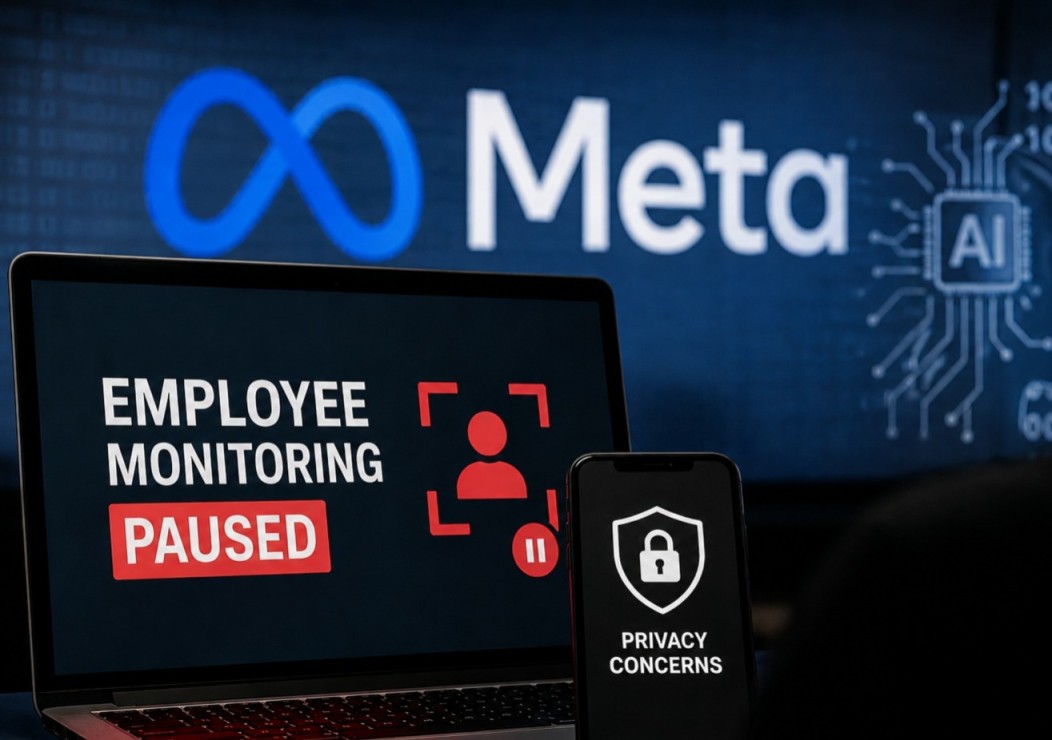
Meta has temporarily suspended an internal initiative aimed at gathering employee activity data for the advancement of artificial intelligence models. This decision comes in response to privacy concerns and opposition from its workforce. The program, named the Model Capability Initiative, involved tracking employee actions such as keyboard inputs, mouse movements, and computer screen content.
The initiative faced significant backlash from employees, with over 1,600 individuals signing a petition against the collection of workplace activity data. The petition raised issues regarding privacy, consent, and the erosion of trust within the company. Despite Meta’s assurances that privacy safeguards were in place and that there was no evidence of misuse of the collected data, the company has chosen to pause the program to reassess its data practices and the system as a whole.
This development occurs amidst Meta’s substantial investment in artificial intelligence, reflecting its commitment to enhancing AI capabilities through extensive computing power and resources. The company believes that data obtained from skilled employees can contribute significantly to the improvement of AI models. However, this situation underscores the ongoing debate about how tech companies should balance data collection for AI purposes with the obligation to protect employee privacy.
The controversy surrounding the Model Capability Initiative highlights the complex issues tech companies face as they strive to innovate while maintaining ethical data practices. As Meta reviews its approach, the broader implications for the tech industry remain significant, particularly in understanding the tensions between technological advancement and individual privacy rights.