
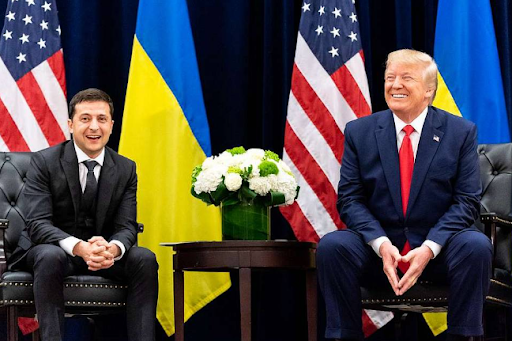
As diplomatic momentum builds toward a possible Ukraine-Russia peace agreement, Ukrainian President Volodymyr Zelenskyy is preparing to meet with US President Donald Trump in Florida this Sunday. The meeting, anticipated to occur at Trump’s Mar-a-Lago estate, represents a pivotal moment in negotiations that have intensified significantly since American officials began circulating a comprehensive peace framework in November.
Zelenskyy announced the upcoming summit on social media, stressing that Ukrainian officials are working urgently to prepare for discussions with the American president. The Ukrainian leader revealed that the meeting would address the most critical and sensitive aspects of peace negotiations, including security guarantees for Ukraine, reconstruction funding, and territorial arrangements concerning the contested Donbas region and the Russian-controlled Zaporizhzhia nuclear power plant. According to Zelenskyy, the proposed peace plan has reached approximately 90% completion, with the goal of finalizing remaining details in the near term.
The current peace framework evolved from a 28-point proposal developed through consultations between US envoys and Russian officials. That initial document drew criticism for appearing to tilt toward Kremlin preferences, prompting Ukraine to push for modifications including stronger security commitments comparable to NATO’s mutual defense provisions. Zelenskyy acknowledged the persistent challenges in reaching agreement with Moscow, noting that “Russia constantly looks for reasons not to agree” to proposed peace terms, highlighting the difficulties negotiators continue to face.
Trump provided cautious commentary on the scheduled meeting, expressing anticipation for discussions while refraining from endorsing specific proposals. “He doesn’t have anything until I approve it,” the American president stated regarding Zelenskyy’s plan. “So we’ll see what he’s got.” Trump also mentioned expecting to speak with Putin soon, maintaining direct communication with the Russian leader as part of the broader diplomatic effort. Recent weeks have seen intensive activity, including Miami meetings where Trump’s envoy held separate discussions with Russian and Ukrainian representatives, conversations US officials characterized as constructive despite Moscow’s efforts to temper expectations.
The diplomatic push unfolds against a backdrop of ongoing military operations and shifting battlefield conditions. Early Saturday, Kyiv faced missile and drone attacks requiring extensive air defense responses, demonstrating the war’s undiminished intensity. In a notable military development, Ukrainian forces recently liberated Kupiansk in the Kharkiv region, contradicting earlier Russian claims of controlling the city. This victory exposed problems with Russian military reporting, with prominent defense-connected bloggers criticizing the systematic provision of exaggerated battlefield assessments. Meanwhile, Putin has reportedly maintained maximalist demands including Ukrainian surrender of the entire Donbas region while hinting at possible limited territorial exchanges, creating a complex negotiating environment. As Russia asserts its readiness to continue fighting indefinitely while simultaneously engaging in peace talks, the pathway toward a negotiated settlement remains uncertain and fraught with obstacles.