
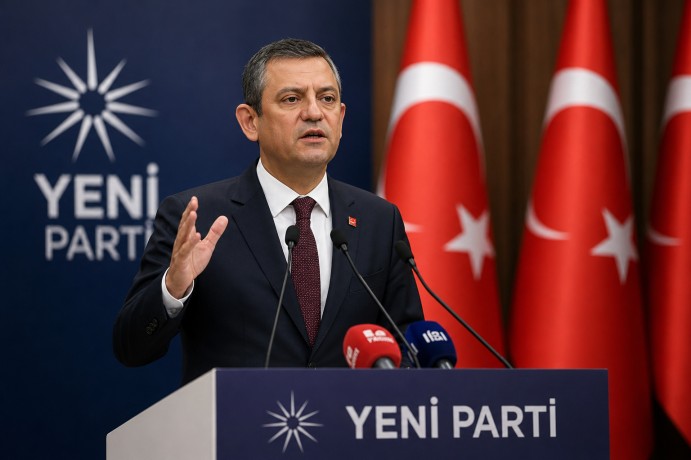
Türkiye’s political scene is witnessing a significant transformation with the formation of a new political entity, the New Party (Yeni Parti), spearheaded by Özgür Özel, a former leader of the Republican People’s Party (CHP). This development comes after 91 members of parliament, disillusioned with the CHP, decided to resign and join the newly established movement. The departure of these lawmakers represents the largest split within the CHP in recent times, reducing its parliamentary representation from 135 seats to just 44. Consequently, the New Party has emerged as the largest opposition group, unseating the CHP from its long-held position as the principal opposition in the Turkish Parliament.
Özgür Özel marked the official launch of the New Party by signing the founding documents, which have been submitted to the Interior Ministry for registration. These 91 former CHP members have also taken on roles within the party’s founding board. At a press briefing in Ankara, Özel announced that the legal registration of the party was complete, and they would soon embark on establishing its leadership structure. He emphasized that the founding board would gather at the historic Anadolu Club, a venue with ties to Mustafa Kemal Atatürk, to elect the party’s chairperson and governing bodies.
Özel expressed optimism about the New Party’s future during the upcoming parliamentary budget negotiations, where it will participate as the main opposition for the first time. He underscored the party’s commitment to eventually leading a government dedicated to economic prosperity and political stability. This parliamentary shift is anticipated to modify seating arrangements within the General Assembly and increase the total number of parliamentary groups from six to seven.
The creation of the New Party follows a period of internal strife within the CHP, which intensified after Kemal Kılıçdaroğlu resumed party leadership due to a court ruling that nullified a previous party congress. In response to the split, CHP spokesperson Müslim Sarı questioned the rationale behind establishing a new party. Sarı argued that Özel’s intention to adhere to similar political principles as the CHP suggested that the new party’s formation might be more about political maneuvering than genuine policy divergence.
The emergence of the New Party is set to redefine opposition politics in Türkiye, especially as the nation approaches future legislative discussions and elections. With the reshuffling of parliamentary dynamics, the political landscape is poised for further evolutions in the coming period.