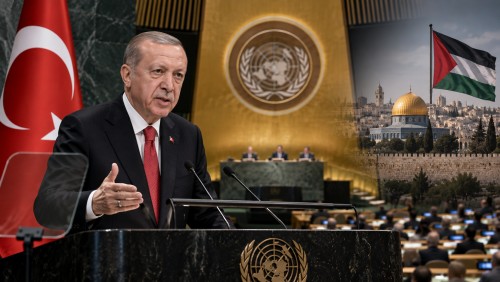
As Turkish President Recep Tayyip Erdoğan prepares to take the stage at the United Nations General Assembly, global observers are keenly focused on the potential implications of his anticipated address. With a history of advocating for significant reforms within the international system, Erdoğan’s upcoming speech is expected to underscore Türkiye’s position on global conflicts and the longstanding Palestine issue.
Erdoğan’s push for change at the United Nations, particularly in the structure and decision-making processes of the Security Council, could have far-reaching implications for international diplomacy. His calls for a more representative and effective UN have been a consistent theme in his international engagements, and any movement in this direction could reshape global governance dynamics.
The topic of Palestine remains a central element of Erdoğan’s international discourse. In previous addresses, including his 2025 UN speech, he urged countries to formally recognize Palestine and expressed Türkiye’s unwavering support for a two-state solution grounded on the 1967 borders, with East Jerusalem as the Palestinian capital. This stance highlights Türkiye’s enduring commitment to addressing the Palestinian question, which continues to be a pivotal issue in Middle Eastern geopolitics.
Additionally, Erdoğan is likely to discuss the ongoing conflict between Russia and Ukraine, as well as other regional disputes, reflecting Türkiye’s active role in fostering negotiations and mitigating conflict impacts. Such discussions could influence international strategies addressing these crises, underscoring Türkiye’s diplomatic influence in the region.
Beyond his UN address, Erdoğan’s visit to New York will include bilateral meetings with other world leaders, providing a platform to strengthen Türkiye’s diplomatic relations and further its international agenda. The outcomes of these interactions could contribute to shaping Türkiye’s foreign policy priorities in the coming months.